
Ingredient Portrait
Black seed oil skin – an old oil that still makes sense
Black seed oil for skin is not another glossy trend with a loud promise and little substance. It comes from Nigella sativa and contains thymoquinone, a compound that gets attention for acne, eczema and skin that stays irritated. Here’s what it actually does — and what it doesn’t.

Why does skin respond better to calm than to force?
People with acne or eczema often get trapped in the same loop: harsh cleansing, acids, dehydration, and then even more inflammation. It’s no surprise the skin becomes more reactive when the barrier is pushed too hard. Black seed oil stands out because it doesn’t try to scrub the issue away; it aims to support the skin’s own resilience.
The key is thymoquinone, a bioactive compound in Nigella sativa that has shown anti-inflammatory, antioxidant and antimicrobial properties in studies. That matters when skin is stuck in defense mode: with acne, where staphylococcus and other microbes can be part of the picture, or with eczema-like irritation where the skin easily tips into a low-grade fire.
This does not mean black seed oil is magic. But compared with conventional options that dry, peel or over-treat, it behaves more like a strategic ally. For some skin types, that is exactly the missing piece: less aggression, more balance.
How to use it wisely
Start with a small amount
Use 1–2 drops on clean skin at night, 2–3 times a week. Black seed oil is potent, so more is not better. See how your skin responds before increasing.
Apply on damp skin
Put it on after cleansing while the skin is still slightly damp. That helps it spread more evenly and can make it feel less heavy or sticky.
Use on active breakouts
If you are acne-prone, spot-apply to problem areas in the evening. Think support, not a quick fix. Inflamed skin needs consistency more than drama.
Let the barrier lead
For eczema-prone skin, use it less often and pair it with a gentle cleanser. The goal is to calm, not to overload the skin with yet another active.
Look at the bigger picture
Skin imbalance is also shaped by sleep, stress and diet. Black seed oil can be a smart addition, but it cannot replace a life that stops beating the skin up.

How to actually build skin that holds up
If you want to use black seed oil skin in a real routine, keep it simple. It works best when skin needs calming rather than stimulation. A small amount in the evening, a few times per week, is often enough. For acne, it can be a complementary step that supports the skin without ramping up irritation.
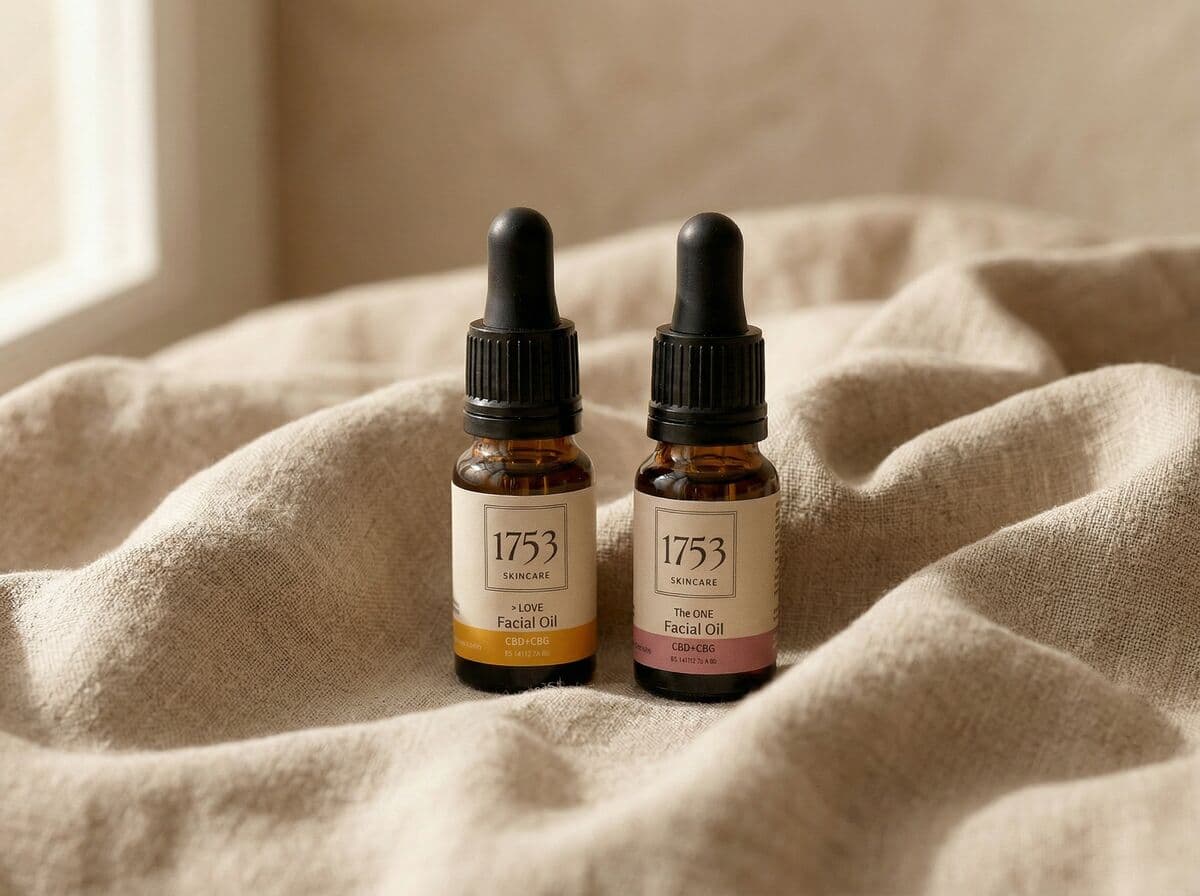
This is also where cannabinoid-based options make sense. I LOVE with CBG has a similar antibacterial direction and can be a more modern choice for acne-prone skin. The ONE, with CBD and MCT, is more about regulating and softening a stressed skin barrier. For many people, that combination is more intelligent than chasing the skin with harsher actives.
If you want a gentler cleanse, Au Naturel Makeup Remover uses MCT oil to clean without stripping the skin bare. And if you want to support resilience from the inside out, Fungtastic Mushroom Extract can be an interesting daily add-on. Not as a miracle, but as a way to stop treating skin like an enemy to defeat.
Frequently asked questions
Can black seed oil help acne?
It may be relevant because thymoquinone has anti-inflammatory and antimicrobial properties. For some skin types it works best as a complementary step, not the only thing you use.
Is black seed oil suitable for eczema?
Yes, but carefully. With eczema-prone skin the goal is to support the barrier and reduce irritation, so start slowly and stop if the skin becomes more reactive.
Is it better than acids?
Not in every case, but often gentler. Acids can help clogged skin for some people, yet if your skin is already stressed, black seed oil may be the less aggressive choice.
How soon will I notice results?
Think in weeks, not days. Inflammation and barrier function need time to shift, especially if you also stop over-cleansing or over-exfoliating.
Sources
- Oláh A, Tóth BI, Borbíró I, et al. Cannabidiol exerts sebostatic and antiinflammatory effects on human sebocytes. J Clin Invest 2014;124(9):3713–3724.
- Lin TK, Zhong L, Santiago JL. Anti-Inflammatory and Skin Barrier Repair Effects of Topical Application of Some Plant Oils. Int J Mol Sci 2017;19(1):70.
- Tóth KF, Ádám D, Bíró T, Oláh A. Cannabinoid signaling in the skin: therapeutic potential of the c(ut)annabinoid system. Molecules 2019;24(5):918.
Article reviewed by Christopher Genberg, founder of 1753 SKINCARE.
Related articles
Ingredient Portrait
cbd for skin – less noise, more balance
CBD for skin is interesting because it doesn’t try to bully the skin into behaving. It works with th...
Ingredient Portrait
cbg for skin – the mother cannabinoid that calms and renews
CBG usually lives in CBD’s shadow, but skin can tell the difference. This is the cannabinoid that ma...
Ingredient Portrait
mct oil skin – light, clean, surprisingly clever
MCT oil is not just another oil sitting on top of your face. It’s fractionated coconut oil built aro...
Comparison
AI skin analysis online vs a dermatologist – which should you choose?
Both help you understand your skin, but in different ways. An AI skin analysis is fast, free and obj...
Guide
How to read your 15 skin metrics
A radar chart full of numbers can feel overwhelming. But each metric tells you something concrete ab...
Guide
Find your skin type – a simple at-home test
Knowing your skin type is the starting point for all skincare. But skin type isn't static – it chang...